









● The build arm of The Rocket Club
Not a research centre. A build room.
Every single thing we build has to solve a problem on Earth first. If it doesn't work here, it isn't ready to go there.
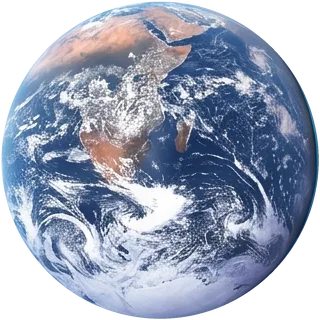
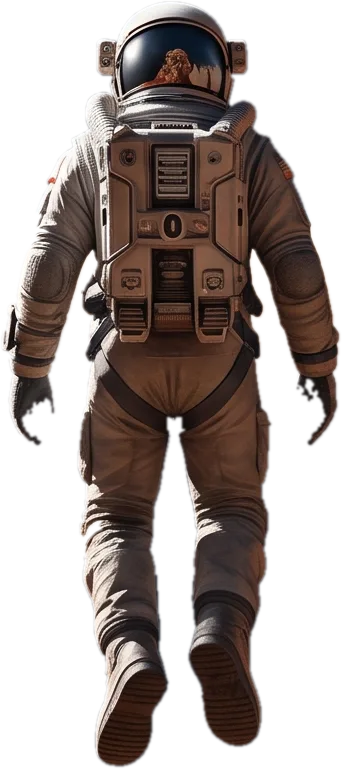
Founders, entrepreneurs, students, graduates and researchers in one room, building the systems Pakistan needs to put 169 people beyond low Earth orbit by 2047. Water. Energy. Health. Food. Disaster response. Only 24 humans in history have travelled beyond low Earth orbit. That's the gap we work in.
Scroll to assemble
01 · The numbers nobody puts on a slide
0.16%
of GDP on research and development. World average 1.92%. Israel 6.35%. South Korea 4.94%.
World Bank / UNESCO, 2023
727,381
Pakistanis left for overseas employment in 2024, including 8,018 engineers and 3,642 doctors. In 2023 it was 862,625. By end-November 2025, another 687,246 had gone. Since 1981, close to 13.9 million.
Bureau of Emigration and Overseas Employment
45,687
Emigration by highly qualified Pakistanis in 2023, up 119% in one year.
Pakistan Economic Survey 2023-24
$355M → $36.6M
Startup funding fell from $355 million in 2022 to $75.6 million in 2023 to $37 million in 2024, and roughly $36.6 million in 2025.
Invest2Innovate, Data Darbar
241.5M
people, 65% under 30. The population all of this is happening to.
Invest2Innovate
Read them together and it's simple. The largest young population in our history. Almost nothing spent on creating knowledge. Almost nothing reaching the people who try to build companies. So the best ones leave, legally, in the hundreds of thousands, and we call the money they send home a success story.
Remittances are not capability. You cannot build a country on other people's payrolls.
02 · The gap
What's actually missing
It isn't talent. Pakistani engineers build at SpaceX, Intel and Nvidia. Our doctors run wards across the Gulf, Britain and America. Our founders raise capital, abroad.
It isn't degrees either.Pakistan has taught aerospace engineering since 1965. NUST's College of Aeronautical Engineering, the Institute of Space Technology and Air University all produce aerospace graduates every year.
Aerospace in Pakistan is taught as a defence and aviation discipline. Nobody teaches closed-loop life support. Nobody teaches human factors for long-duration flight. Nobody teaches space-systems integration as something you build rather than something you study.
And nowhere in this country can a 24-year-old work full-time on a hard physical problem beside a founder who has shipped, get graded on what they built, and walk out with a company instead of a certificate.
We have classrooms and we have graduates.
We don't have a build room.
PK2047 Labs is the build room. And because the courses that should feed it don't exist, we're building those too.
03 · What Labs is
A build room with
a physics deadline
PK2047 Labs is the build arm of The Rocket Club, part of The Rocket Guy Space, working on the systems behind PK2047's 169 Mission: by 2047, Pakistan's 100th year, 169 people beyond low Earth orbit, toward Mars, and home. Read the mission
We're not a student society, an incubator or a think tank. Talent comes in through Rocketathon. We don't care which university you're from, or whether you went. Enter Rocketathon
Phoenix Venture House is founding steward of PK2047 and backs Labs, so what gets built here doesn't die as a paper.
04 · Who's in the room
Five kinds of people on the same problem.
Separately, each group fails in a predictable way. Researchers build things nobody buys. Founders build things that don't work. Students build things that never leave campus. Put them in one room against a physics deadline and you get capability.
05 · Six build tracks
What we build
TRACK 01
Life support
Closed-loop air, water and waste. Oxygen generation, CO2 removal, water recovery, waste processing, microbial control.
On EarthWater recycling for neighbourhoods and industry that run dry, off-grid sanitation, clean-air systems for cities with dangerous winter air, potable water units for flood and disaster zones.
TRACK 02
Propulsion and power
Delta-v for departure, mid-course and return. Chemical, electric and hybrid architectures. Reusable systems and orbital refuelling.
On EarthEnergy storage and power management for unreliable grids, off-grid systems for villages the grid never reached, efficient drive systems for industry that currently burns imported fuel.
TRACK 03
Materials and manufacturing
Precision parts, radiation shielding, structures, onboard fabrication.
On EarthImport substitution for precision components, lighter and cheaper structural materials for construction, local manufacturing capability instead of buying every critical part in foreign currency.
TRACK 04
Human systems
Bone, muscle, vision, immunity and mood over months in microgravity. Protocols, countermeasures, artificial gravity trade-offs.
On EarthRemote diagnosis and treatment protocols for districts with no specialist, portable monitoring for rural clinics, rehabilitation for immobile and elderly patients, occupational health for people working in hard conditions.
TRACK 05
Autonomy and avionics
Guidance, navigation, AI-assisted operations, autonomous diagnostics and repair.
On EarthPredictive maintenance for factories and fleets, autonomous inspection of infrastructure nobody has the staff to inspect, agricultural sensing, logistics routing, early-warning systems for floods and landslides.
TRACK 06
Governance and psychology
Selection standards, command structure, conflict protocols, privacy rules, mental health response, tested in analog habitats on Earth.
On EarthHow high-performing teams are selected, led and kept functional under stress. Applicable to every company, hospital, emergency service and institution in the country, and the cheapest of all six to deploy.
06 · Labs Credentials
We're building
the courses too
We could spend twenty years complaining that Pakistani universities don't teach this. Instead we're teaching it, and we're issuing the credential. Labs Credentials are stackable microcredentials in the disciplines PK2047 needs and Pakistan doesn't currently offer. Each one is earned by building something that works, assessed on demonstrated output, and co-issued with the partner institution wherever a partnership exists.
Foundation
Earned at Rocketathon
You demonstrate you can build under constraint in one layer of the stack: energy, chips, data centres, AI models or applications.
Specialist
Earned inside a Labs track
A working subsystem, documented, tested and reviewed. This is where the missing curriculum gets taught: closed-loop life support, space-systems integration, human factors for long-duration flight, autonomous diagnostics, analog habitat governance.
Custody
Earned by owning something end to end
You took a subsystem from build to customer, or you carried a team through a failure and out the other side. This one can't be studied for.
Who they're for. University students stacking them alongside a degree. Graduates who need a credential that shows capability, not attendance. Polytechnic, DAE and vocational builders, whose hands-on skill the stack genuinely needs. Working engineers retraining into space and deep tech. Founders who need the technical depth to lead a hardware company.
Built with institutions, not against them.We'd rather run these inside universities than beside them. Labs brings curriculum, assessment and live projects into programmes that currently have none, and we co-brand and co-issue. Faculty get a research pipeline with industrial deadlines. Students get a reason to stay in Pakistan. If your institution wants to offer this, the door is open. Partner with Labs
Honest about what these are.Labs Credentials are not a degree and we won't pretend otherwise. They're a record of what you built, verifiable by anyone who asks, backed by the institutions that co-issue them. We intend to pursue formal recognition through the proper channels. Until we have it, we won't claim it.
07 · The rule that keeps us honest
Everything we build has
to work on Earth first
Here's the thing most people miss about a Mars mission. Keeping 169 people alive in a sealed can for months is the same engineering problem as keeping a city alive on scarce resources.
Space just removes the option of muddling through. Which means the fastest way to build technology Pakistan desperately needs on the ground is to design for the hardest version of the problem, then bring it home.
A country that already lives with the space problem
Pakistan runs short of water and is heading for worse. Our cities lose power and run generators on imported fuel. Our hospitals are concentrated in a handful of cities while most people live somewhere else. Floods displace millions and take out infrastructure faster than we rebuild it. Our industry imports precision parts it could make.
A spacecraft engineer and a Pakistani municipal engineer are solving the same five problems. One of them has a deadline enforced by physics.
So here's our rule, and we enforce it hard
If a subsystem has no buyer on Earth, it isn't ready to be worked on. Not “should ideally have.” Has. A named customer with a real problem and a budget. Projects that can't show one don't get resources, no matter how elegant the physics.
That rule does three things. It keeps us honest, because a paying customer is a harsher reviewer than a peer reviewer. It funds the next 21 years in a country that spends 0.16% of GDP on research, so we don't spend two decades waiting for a grant. And it means Pakistan gets the benefit now, in 2027 and 2031 and 2039, not only in 2047 if the rocket flies.
The rocket is the audit. The dividend arrives long before launch day.
08 · Build to venture
01
Build
A team takes a subsystem and gets it working, graded on demonstrated function.
02
Sell
The team finds the terrestrial customer and proves someone will pay.
03
Incorporate
The strongest projects become companies, with founders from the team.
04
Compound
Each company is a piece of national capability that also employs people and earns revenue.
Do that fifty times and Pakistan has an industrial base. That base is the mission. The launch is the day we find out whether it worked.
09 · How you get in
Rocketathon is
the front door
Our national build challenge, where humans and machine build together across the full stack. Build well there and you're invited into the full Rocketathon, then into Labs.
What we look for
You build under constraint, you finish things, you can show your work, and you can hold one hard problem longer than a semester.
What we don't look for
A perfect CGPA, a famous university, a polished pitch, or permission from anyone.
Direct applications
Researchers, PhDs and founders with a subsystem already in hand can apply directly.
10 · Partner with Labs
Universities and colleges
Host Labs Credentials inside your programmes, co-supervise projects, place postgraduates, share workshop access. We bring the curriculum and the assessment. You bring accreditation and students.
Polytechnics and TVET institutes
The stack needs machinists, fabricators, technicians and welders as much as it needs PhDs. Your students belong in this room.
Industry
Sponsor a track, buy the terrestrial version, hire from the pipeline. You'd be funding R&D that most of Pakistan's private sector doesn't fund at all.
Diaspora engineers and scientists
You left because there was no room here. Help build the room. Mentor a track, review work, teach a credential module, send equipment, invest, without moving home.
International labs and space organisations
Built in Pakistan, built with the world. We're not asking for charity. We intend to develop capability worth partnering with.
Investors
The companies coming out of Labs solve problems on Earth first. That's the entire point of the terrestrial rule.
11 · Where we are today
PK2047 started in 2024. The 169 Mission was named publicly in 2025. Rocketathon Zero runs this month with 1,000 participants. Labs is assembling its first cohort and its first credential modules now.
We'd rather say that plainly than dress it up, because every claim on this page will be checked against what we ship. Come back and watch this section change.
PK2047 Labs · The Rocket Club
Built in Pakistan.
Built with the world.
Built for space. Useful on Earth first.
Later, as they fill: The Cohort · Projects · Results & Publications · Ventures out of Labs